
However bad things are, we must not forget that there are barricades of resistance this very minute that are holding off something much crueller. Eight billion people are alive, and, for the moment, there are still trees and bees. Find your nearest barricade. As long as we can imagine something worse, we have a fight on our hands.
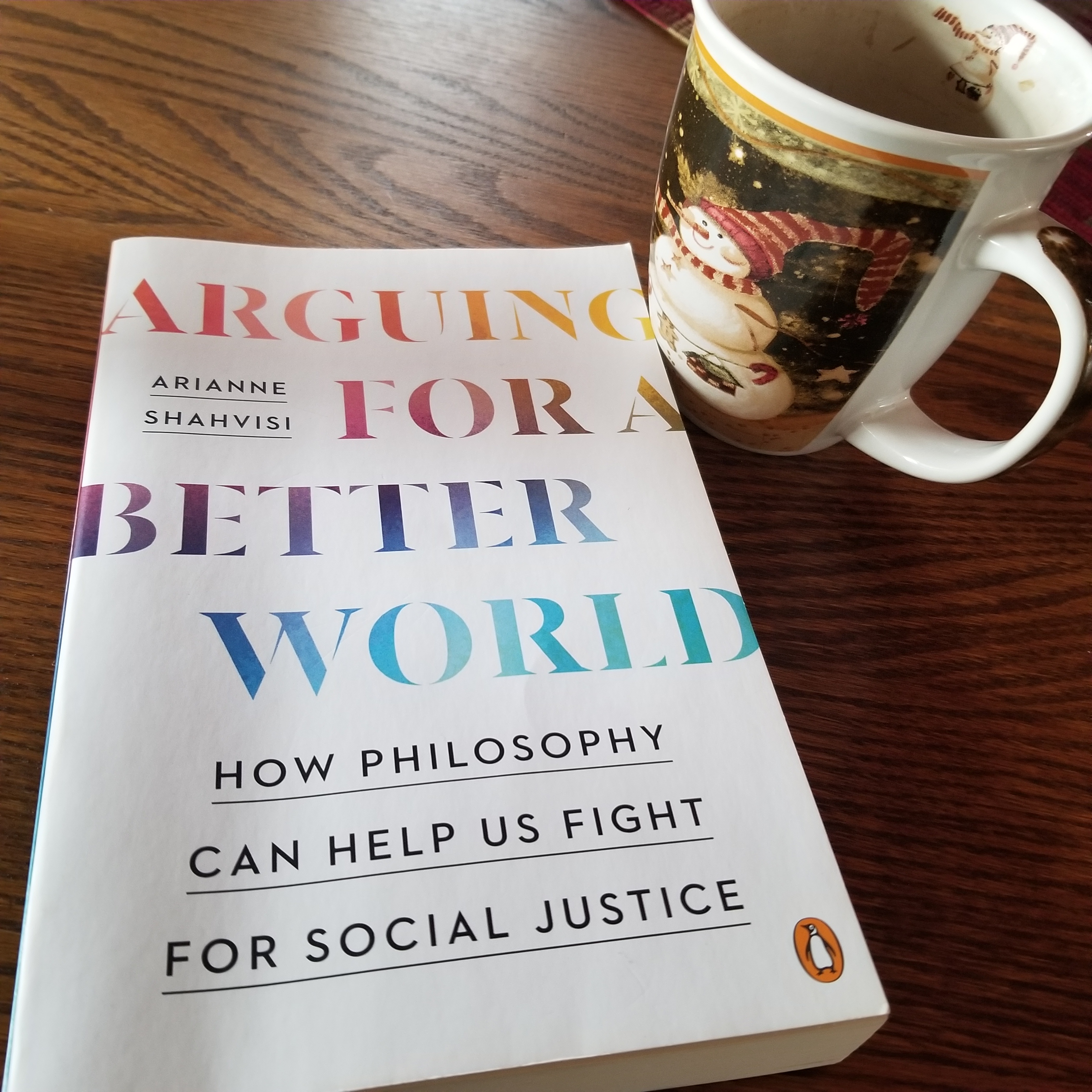
I generally avoid arguing like the plague – I hate confrontation of any kind. Cue the racing heart, shallow breath, empty brain…which means I’m generally incapable of a coherent exchange anyway, so I don’t go there if I can help it. But Arianne Shahvisi’s Arguing for a Better World caught me on a day when despair at the societal divisiveness that is the norm these days pushed me to take some kind of positive step. Besides, the “How Philosophy can Help Us Fight for Social Justice” tagline let me convince myself it was all theory…I wouldn’t actually have to argue, just think about why and how. All that overthinking is my forte!
And that was an accurate first impression, mostly. But oh, the theory – and the history, and the word parsing, and the linguistic hoops philosophers love to jump through as we try to make sense of often nonsensical actions and thought. Something about not reasoning someone out of a belief they never reasoned themselves into? That’s reality, I’m afraid.
Shahvisi is marginally more optimistic, but so much of her text is deep, and complicated, and filled with critical thinking that far too many people have no awareness of, much less skill at. How can we begin to debate – much less argue (which for me always means raised voices and often pain) – when we don’t even agree on vocabulary? But I learned a lot, clarified some of my unreasoned-into beliefs (political correctness, Black Lives Matter, cancelling, and more), and got to spend time in philosophical inquiry.
I’ll take the win, and find those barricades I can handle.


 CL Pauwels at Large
Leave a reply to clpauwels Cancel reply